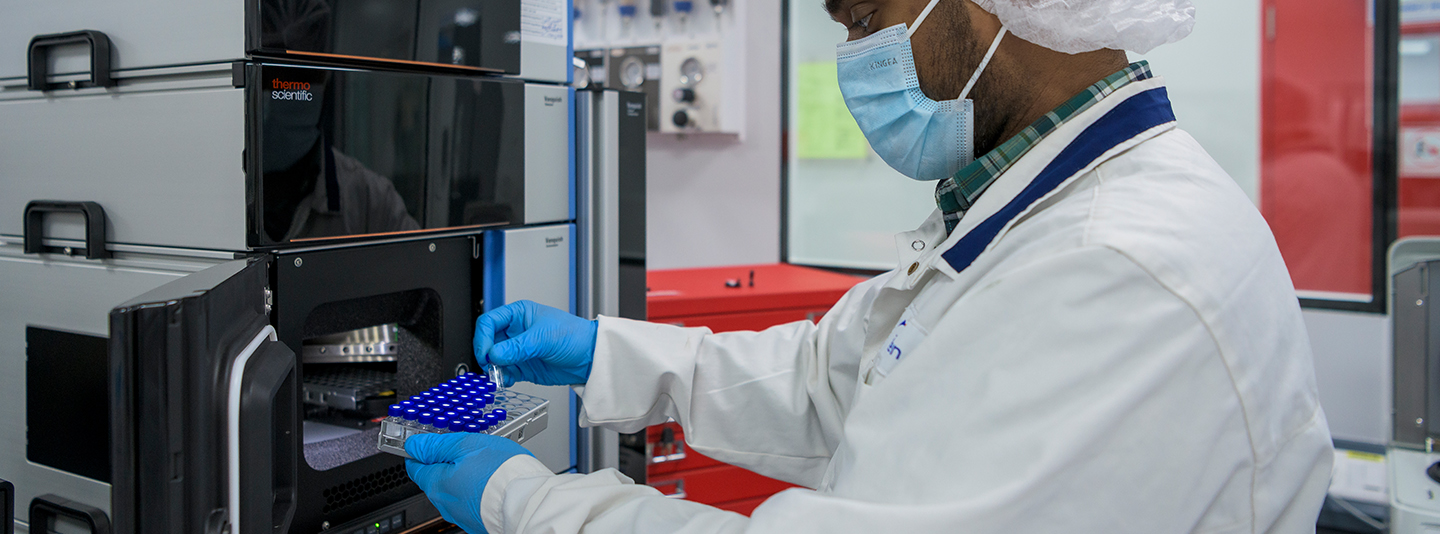

The global pharmaceutical industry is shifting toward outsourced analytical testing due to the rising complexity of biologics, compressed timelines, and the high cost of building internal GMP-compliant laboratories. Service providers now handle most analytical testing for biotech firms, as sophisticated characterization often exceeds in-house capabilities.
Standalone GMP analytical services offer dedicated resources, operational flexibility, and technical expertise. This model enables faster execution, scalable support, and uninterrupted workflows free from manufacturing-related constraints, ultimately overcoming bottlenecks and accelerating development timelines.
This whitepaper explains how standalone GMP analytics helps overcome analytical bottlenecks, enhance flexibility, accelerate development timelines, and strengthen overall program execution.
Current Industry Dynamics
The analytical testing landscape has fundamentally shifted as biologics complexity has surpassed the technical capabilities of most internal laboratories. Modern biologics development presents unprecedented analytical challenges as monoclonal antibodies, bispecific constructs, and advanced therapies require analytical methodologies that extend far beyond traditional small molecule approaches.
The regulatory environment compounds these challenges. Continuous FDA audit pressure keeps quality management in sharp focus while heightened FDA scrutiny with notable spikes in stability-program findings demands analytical capabilities that can withstand the most rigorous inspection standards. This regulatory intensity requires specialized expertise that most companies cannot maintain internally.
The Speed-to-Market Imperative
Speed to market is the primary driver for outsourcing today, as building a new manufacturing plant takes several years and massive capital investment, while a biologics CDMO already has validated cleanrooms and bioreactors ready for use, offering an immediate path to beginning clinical trials. However, this speed advantage extends beyond manufacturing to analytical services, where rapid method development and validation can compress overall development timelines by months.
Every month saved translates to accelerated IND filing and earlier patient access to critical therapies. Companies increasingly recognize that analytical bottlenecks, rather than manufacturing capacity, often determine the critical path of a program.
Technical Specialization Without Compromise
Unlike integrated CRDMOs where analytical resources are frequently diverted to support manufacturing troubleshooting or batch releases, standalone laboratories focus entirely on method innovation and optimization. This specialization manifests in several critical areas:
Operational Flexibility Advantages
During critical development phases like IND-enabling studies, standalone providers can mobilize dedicated resources immediately without competing against manufacturing batch schedules, allowing work to proceed at maximum velocity.
Table 1: Standalone vs. Integrated Analytical Models
| Parameter | Standalone Analytics | Integrated CRDMO |
| Resource Allocation | 100% dedicated to analytical | Shared with manufacturing priorities |
| Method Development | 6-8 weeks typical using Aragen platform methods | 6–12 weeks typical using Aragen platform methods |
| Peak Capacity Response | Immediate scaling | Limited by integrated constraints |
| Technology Investment | Latest instrumentation priority | Manufacturing equipment priority |
| Cross-Contamination Risk | Analytical-only workflows | Manufacturing changeover risks |
| Regulatory Focus | Analytical compliance specialization | Divided across manufacturing & analytical |
Financial Efficiency Through Focused Operations
Strategic outsourcing converts fixed capital expenses into manageable operational costs, saving startups over 40% on initial lab setup. Standalone outsourcing amplifies this savings because clients pay strictly for testing services without subsidizing massive, unneeded manufacturing infrastructure. The economic model becomes particularly attractive for mid-stage biotech companies with established manufacturing partnerships. Rather than building internal analytical capabilities that may be underutilized between programs, these companies can access world-class analytical expertise on a per-project basis.
Comprehensive Analytical Platform
Aragen empowers partners with a comprehensive suite of analytical services, ensuring biotherapeutic products meet the highest standards of quality, safety, and efficacy, with expertise across a diverse range of biotherapeutics and state-of-the-art infrastructure.
Platform Methods for mAb Characterization (30+ Methods):
Regulatory-Ready Infrastructure
Dedicated facilities are designed to provide precision, speed, and compliance, with all equipment qualified and validated in accordance with industry guidelines (GAMP, CSV, etc.), ensuring regulatory compliance and reliable results. Aragen’s analytical infrastructure operates under full GMP compliance with documented validation packages that withstand regulatory scrutiny.
The facility maintains stability testing chambers spanning the complete ICH guideline matrix, enabling comprehensive shelf-life studies under real-time, accelerated, and stress conditions. Aragen offers comprehensive stability studies designed to assess how biologics behave under various conditions to establish shelf life under real-time (RT), long-term (LT), and accelerated (AT) stability studies.
Outsourcing Model Selection
Technology Transfer Excellence
Method transfer services ensure seamless transitions between development lab, GMP facilities, client sites and external laboratories while maintaining consistency and compliance. Standalone partnerships rely on robust protocols to maintain method performance across environments, driven by three critical success factors:
Standalone GMP analytical services are redefining biologics development strategy. By decoupling analytics from manufacturing constraints, organizations streamline workflows, access specialized expertise, and ensure consistent, high-quality outcomes.
As advances in AI, automation, and risk-based regulatory expectations require more agile, adaptive analytical approaches, standalone providers are uniquely positioned to adopt these innovations quickly. Ultimately, embracing standalone models allows biopharma companies to accelerate development while maintaining a resilient, regulatory-ready posture—making it a strategic choice for advancing programs with confidence.
