

Bioconjugation has emerged as a powerful strategy for creating targeted therapeutics that combine the advantages of peptides, proteins, and small-molecule payloads. Success at the discovery stage depends on precise peptide engineering, linker selection, and site-specific conjugation to achieve optimal stability, efficacy, and pharmacokinetics. Through integrated expertise in solid-phase peptide synthesis (SPPS), linker engineering, and advanced bioconjugation technologies, Aragen enables the development of well-defined peptide-based bioconjugates. This whitepaper highlights key bioconjugation approaches and demonstrates their application through representative Aragen case studies.
The success of modern bioconjugates depends on the careful integration of three critical design elements: the targeting biomolecule, the linker architecture, and the conjugation chemistry. While advances in biologics and peptide therapeutics have expanded the range of targeting modalities, linker design and site-specific conjugation remain key determinants of conjugate stability, manufacturability, pharmacokinetics, and biological activity.
At the discovery stage, bioconjugation strategies must enable precise control over conjugation sites, ratio of drug to biomolecule, and functional group placement while preserving the integrity of both the peptide and the carrier molecule. Leveraging extensive expertise in peptide synthesis and modification, Aragen supports the design and synthesis of peptide-based bioconjugates through a combination of advanced solid-phase peptide synthesis (SPPS), linker engineering, and site-specific conjugation technologies.
Aragen’s platform enables the generation of peptide-protein conjugates, peptide-drug conjugates (PDCs), peptide-oligonucleotide conjugates, and polymer-based conjugates through a broad range of site-specific chemical and enzymatic conjugation strategies, including:
By integrating functional handles directly during peptide synthesis, specific conjugation sites can be introduced with high precision, eliminating heterogeneity often associated with post-synthetic modifications and enabling streamlined discovery workflows. This approach allows rapid exploration of alternative conjugation strategies while maintaining analytical rigor and reproducibility, accelerating the development of differentiated peptide-based therapeutics.
Site-specific modification of cysteine residues remains one of the most widely used strategies for generating homogeneous protein-peptide conjugates. The relatively low abundance and high nucleophilicity of cysteine residues enable selective conjugation while preserving protein functionality. Leveraging this approach, Aragen developed Fc(IgG)-peptide conjugates using two complementary thiol-reactive chemistries—iodoacetyl and maleimide to achieve controlled drug-to-antibody ratios (DARs) and high-quality conjugate profiles.
Conjugation Workflow
Peptides were synthesized via SPPS with the desired conjugation functionality incorporated during synthesis. Following controlled reduction of accessible cysteine residues on the Fc protein, the peptide-linker construct was reacted under optimized conjugation conditions. The resulting Fc-peptide conjugates were purified and characterized to evaluate conjugation efficiency, DAR, and product quality.

Figure 1. Cysteine-directed Fc(IgG)-peptide conjugation workflow.
Approach 1: Thiol-Iodoacetyl Chemistry
To evaluate iodoacetyl-mediated conjugation, a peptide bearing two iodoacetamide functional groups was synthesized and reacted with the Fc protein under optimized conditions. Careful process optimization enabled selective thiol conjugation while maintaining control over product heterogeneity.
Outcome
The desired DAR (= 1) was achieved successfully. Final purified conjugate purity: 92.78%
The study demonstrated that thiol-iodoacetyl chemistry can efficiently generate highly pure Fc-peptide conjugates with controlled payload loading.

Figure 2: Fc-peptide conjugation using thiol-iodoacetyl chemistry.
Approach 2: Thiol-Maleimide Chemistry
As an alternative cysteine-targeting strategy, a maleimide-functionalized peptide was synthesized and conjugated to the Fc protein under standard reaction conditions. Maleimide chemistry offered rapid and selective coupling to thiol groups, enabling efficient conjugate formation.
Outcome
These results highlight the effectiveness of maleimide-based conjugation for achieving higher payload loading while maintaining control over conjugate quality and reproducibility.

Figure 3: Fc-peptide conjugation using thiol-maleimide chemistry.
This study demonstrates Aragen’s capability to design and synthesize peptide conjugates using multiple cysteine-directed conjugation strategies. By combining peptide engineering with optimized linker chemistry, the team successfully achieved targeted DARs and high-purity Fc-peptide conjugates, providing flexible solutions for discovery-stage bioconjugate development.
As bioconjugate complexity increases, the need for highly site-specific conjugation approaches becomes increasingly important. Enzyme-mediated ligation combined with bioorthogonal click chemistry offers exceptional control over conjugation sites while minimizing unwanted modifications.
Aragen developed a two-step strategy utilizing Sortase A-mediated ligation followed by click chemistry to construct a site-defined Fc-peptide conjugate.

Figure 4: Sortase A-mediated linker incorporation followed by click chemistry-based peptide conjugation.
Step 1: Sortase A-Mediated Linker Installation
A linker bearing a clickable alkyne functionality was enzymatically attached to the Fc protein using Sortase A.
The reaction involved:
Following conjugation, excess linker and reaction components were removed through purification and buffer exchange to generate a well-defined Fc-linker intermediate.
Step 2: Bioorthogonal Peptide Attachment
The purified Fc-linker intermediate was subsequently reacted with an azide-functionalized peptide using click chemistry.
This modular approach offers several advantages:
Outcome
Successful generation of the desired Fc-peptide conjugate confirmed the effectiveness of combining enzymatic ligation and click chemistry for precision bioconjugate assembly.
This approach demonstrates how orthogonal chemistries can be integrated to create structurally defined next-generation bioconjugates suitable for applications in targeted therapeutics, imaging, and biomolecular engineering.
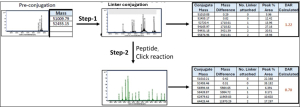
Figure 5: Analytical characterization of the Sortase A-enabled bioconjugate.
The effectiveness of a bioconjugate is determined not only by the targeting peptide or biologic, but also by the chemistry used to connect them. Early consideration of peptide design, linker selection, conjugation strategy, and analytical characterization can significantly improve the probability of downstream success.
Aragen’s integrated discovery platform enables:
By combining peptide chemistry expertise with advanced bioconjugation technologies, researchers can efficiently explore multiple molecular architectures while maintaining high levels of analytical control and reproducibility.
For nearly a decade, Aragen has leveraged deep expertise in solid-phase peptide synthesis and peptide engineering to support discovery programs across diverse therapeutic modalities. Our capabilities extend beyond peptide synthesis to include linker engineering, bioconjugation, purification, and analytical characterization, enabling a comprehensive approach to discovery-stage bioconjugate development.
We offer:
Advanced Peptide Engineering
Bioconjugation Expertise
Customized Discovery Solutions
Comprehensive Development Support
By bringing together peptide synthesis, linker engineering, and bioconjugation expertise under one roof, Aragen helps accelerate the discovery of next-generation peptide-based therapeutics and bioconjugates designed for improved targeting, efficacy, and translational success.
Bioconjugation continues to transform therapeutic design by enabling the precise integration of targeting, delivery, and biological functionality within a single molecular construct. As peptide-based modalities gain momentum across oncology, metabolic disorders, immunology, and other emerging therapeutic areas, the ability to engineer peptides and linkers with precision becomes increasingly important.
Through integrated capabilities spanning peptide synthesis, peptide modification, linker engineering, and site-specific conjugation, Aragen provides discovery teams with the tools needed to rapidly design, construct, and evaluate sophisticated bioconjugates. The case studies presented here demonstrate how rational peptide engineering, linker design, and site-specific conjugation strategies including cysteine-directed and enzyme-mediated approaches can deliver controlled, high-quality bioconjugates that support advancement from early discovery toward clinical development.
Contact Aragen to discover how our expertise in peptide chemistry, linker engineering, and bioconjugation can accelerate your discovery journey.
