

Enabling Faster Decisions: The Role of Predictable Turnaround Times in DMPK Programs
In lead optimization, every compound progression decision depends on timely access to high-quality data. DMPK studies provide critical insights into a molecule’s developability, helping teams determine which compounds should advance and which require further optimization. However, the value of these insights depends not only on data quality but also on when they become available.
Within the Design-Make-Test-Analyze (DMTA) cycle, DMPK data serves as a key decision-making input. When ADME and PK results arrive late, medicinal chemistry and DMPK teams cannot evaluate compounds together, creating gaps in the structure-activity relationship (SAR) understanding. This often forces teams to either delay the next design cycle or make decisions based on incomplete information, increasing both timelines and risk.
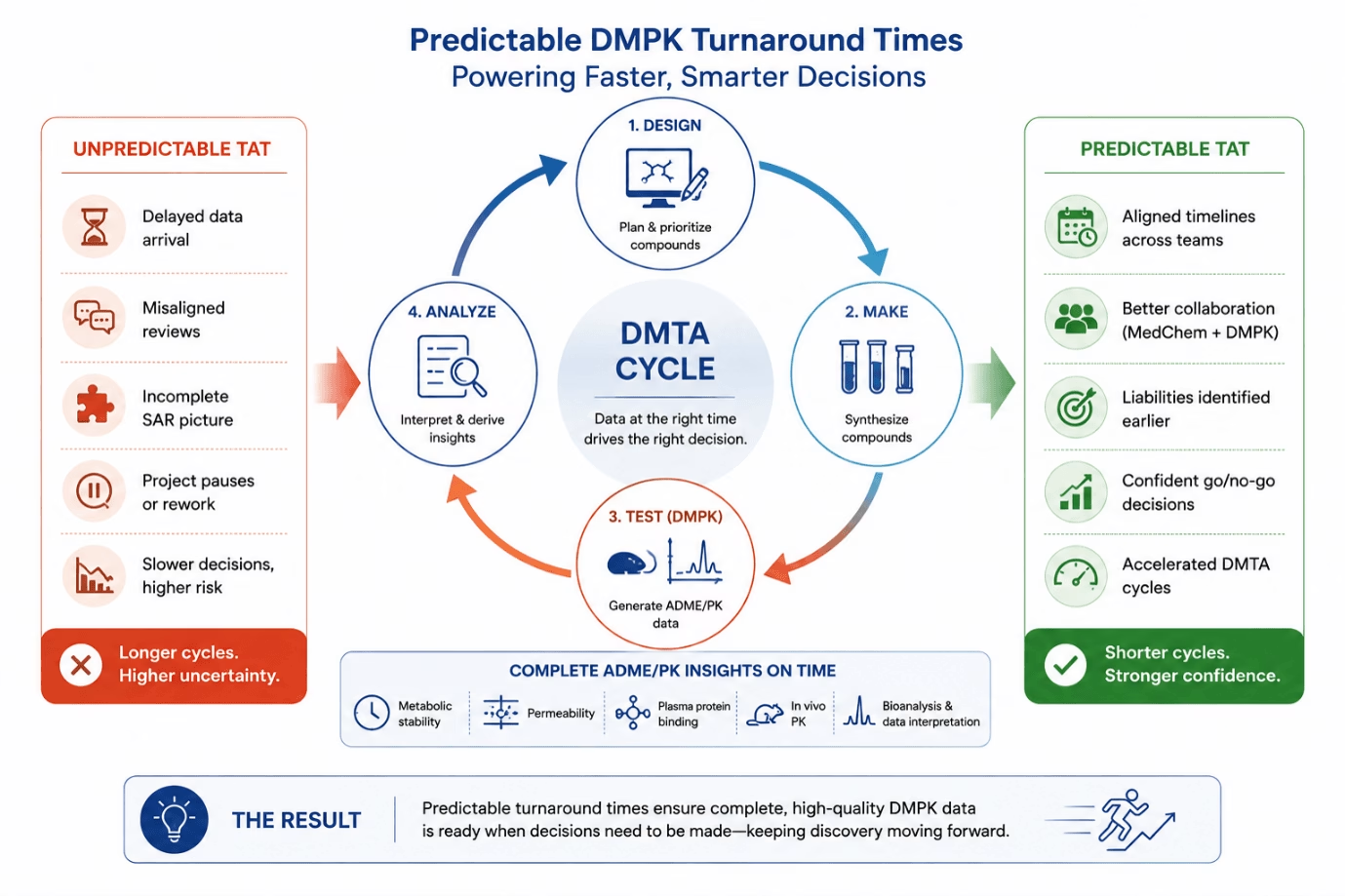
Figure 1: Predictable DMPK turnaround times enable smoother DMTA cycles by aligning data delivery with compound design decisions, reducing delays and improving decision confidence
Why Predictability Matters
A single rapid assay result provides limited value when teams need a complete ADME/PK package to make informed compound progression decisions. Data from metabolic stability, permeability, plasma protein binding, and in vivo PK studies need to converge within a defined timeframe to effectively support the next DMTA cycle. Predictable turnaround times help discovery teams:
- Maintain momentum across iterative DMTA cycles.
- Align medicinal chemistry and DMPK reviews.
- Identify liabilities earlier and redesign compounds faster.
- Prioritize high-potential molecules with greater confidence.
- Reduce idle time between design and testing stages.
- Enable informed go/no-go decisions using complete datasets.
Predictable data availability shortens the interval between compound design and redesign, helping teams accelerate learning cycles and evaluate more hypotheses in less time.
The Operational Foundations of Precision TAT
Delivering predictable turnaround times across a DMPK workflow is not simply a matter of executing individual assays quickly. Traditional outsourcing models often involve multiple handoffs between compound management, in vitro ADME, in vivo PK, bioanalysis, and reporting teams. These handoffs can introduce delays and make overall timelines difficult to predict.
Supporting precision TAT requires integrated infrastructure, effective planning, robust operational controls, and seamless coordination across functions.
How Aragen Enables Predictable Turnaround Times
Aragen’s DMPK platform is designed to help discovery teams make faster, more informed decisions through reliable data delivery. The goal is simple: provide timely, high-quality data that enables faster and more informed decision-making.
Key enablers include:
- Integrated DMPK workflows spanning in vitro ADME, in vivo PK, bioanalysis, and data interpretation.
- High-throughput automation and advanced analytical capabilities that support efficient study execution.
- Proactive project governance and capacity planning to minimize scheduling bottlenecks.
- Dedicated project management through XLRATE™, ensuring visibility, coordination, and timely communication.
- Scientific partnership and consultative support to transform data into actionable insights.
From Data Delivery to Faster DMTA Cycles
The value of DMPK data is not measured solely by its quality, but by how quickly and predictably it can be used to drive the next decision. When ADME and PK insights are delivered within expected timelines, scientists can design, test, and refine compounds more efficiently, keeping DMTA cycles moving without interruption.
By combining scientific expertise, integrated execution, and an on-time delivery commitment, Aragen helps accelerate DMTA cycles and enable confident, data-driven decisions.
Looking to accelerate your lead optimization program with reliable DMPK insights and predictable turnaround times? Connect with Aragen’s DMPK experts to learn more.
