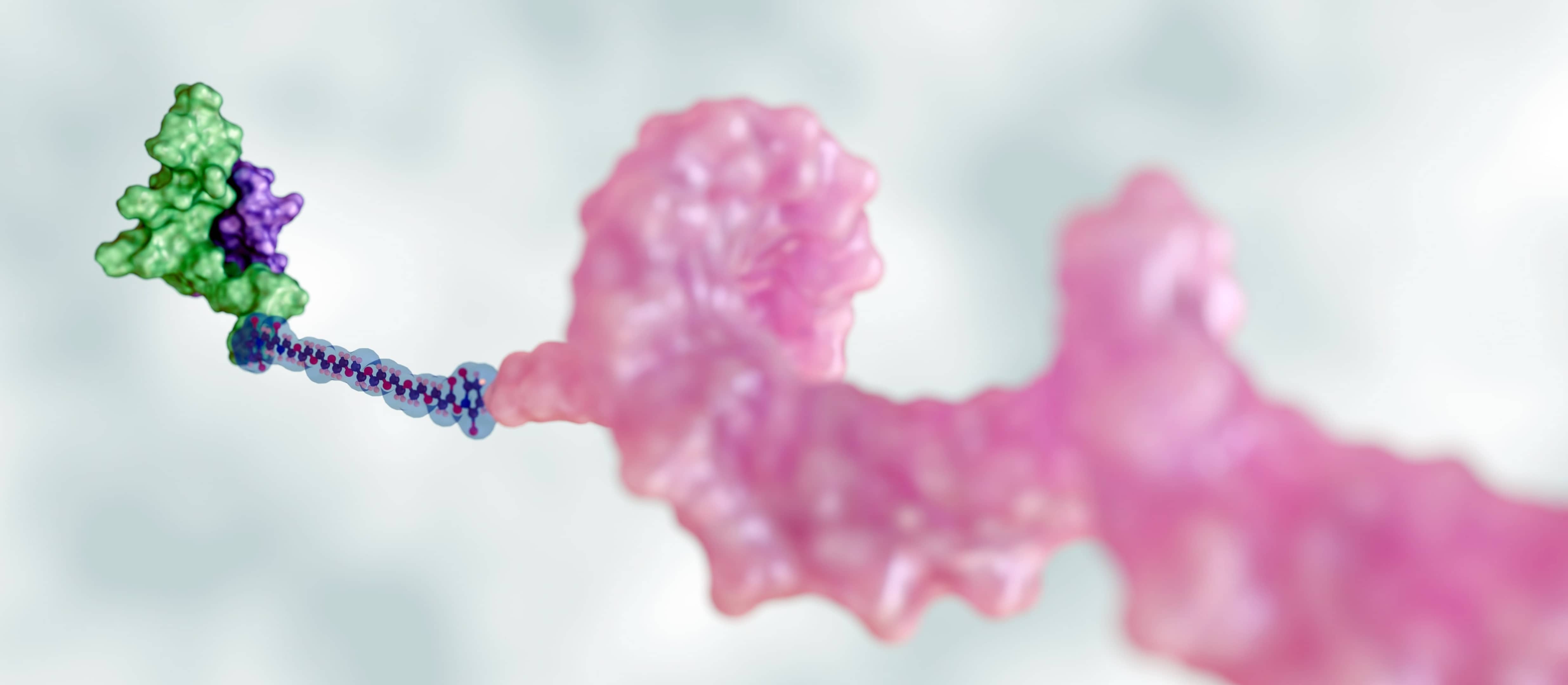

For an ADC, drug–antibody ratio (DAR) is a primary determinant of therapeutic index i.e. potency, safety, pharmacokinetics, and product quality. In cysteine-directed antibody-payload conjugation, uncontrolled DAR leads to heterogeneity, aggregation and rapid systemic clearance at high DAR, and suboptimal tumor killing at low DAR. An effective DAR-optimizing strategy ensures a narrow, reproducible DAR window that maximizes therapeutic index, minimizes aggregation and variability, and delivers consistent clinical performance. By linking DAR to critical quality attributes and clinical outcomes, DAR optimization becomes a cornerstone for robust manufacturing, regulatory confidence, and successful translation from bench to bedside.
In cysteine-directed conjugation to interchain disulfides, DAR optimizing strategy involve precise control on reduction, linker–payload stoichiometry, and conjugation conditions. Besides this, conjugation chemistries (maleimide, iodo/bromo-acetamide chemistry) are also critical DAR control strategy. Classical maleimide approaches demand strict process control due to broad DAR distributions; while re-bridging or site-specific cysteine strategies enable tighter DAR control by directing conjugation to defined sites, resulting in more homogeneous ADC populations, though often with lower payload loading.
In this study, we have performed cysteine-directed antibody-payload conjugation and implemented precise control on reduction and linker–payload stoichiometry to control the DAR. Further, we could also show that payload conjugation at different DAR does not have any impact on antigen-binding property of ADC. The workflow integrates bioconjugation, LC-MS-based DAR estimation, aSE-HPLC-based purity and aggregation analysis, and antigen-binding studies (using SPR and FACS).
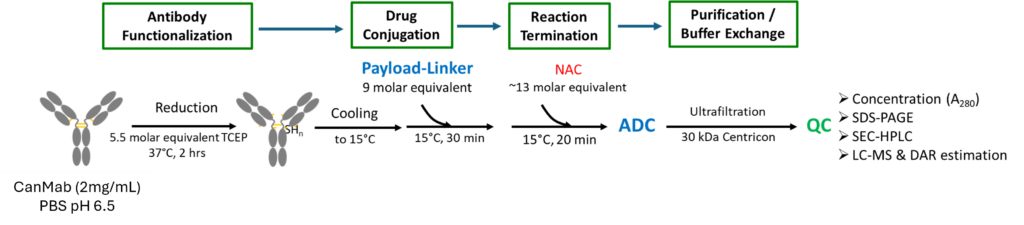
Figure 1: Payload conjugation method and QC parameters.
Higher-DAR (~8) ADC Generation and Characterization: A conjugation reaction using an optimized mAb:TCEP:payload molar equivalent ration was performed following the described method (Figure 1). The reaction yielded an ADC with a DAR 7.96 (~8). Figure 2 presents the associated QC data and DAR calculation.
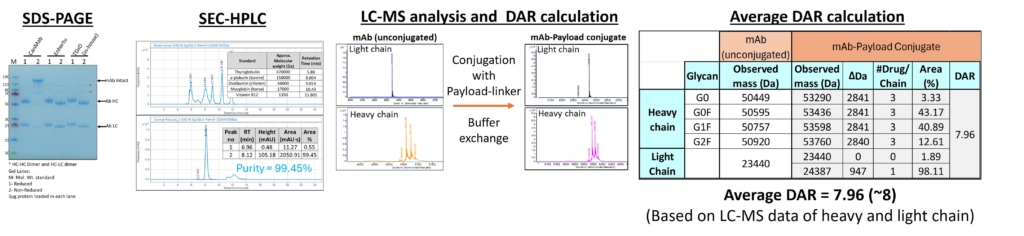
Figure 2: ADC (DAR-8) generation followed by QC and DAR determination.
Lower-DAR ADC Generation and Modulation: Conjugation reactions employing reduced mAb:TCEP:payload (P-L) ratios were evaluated using the same workflow (Figure 1). Initially, both TCEP and payload amounts were decreased, followed by maintaining a constant TCEP level while increasing the payload amount. This reduction in TCEP and payload molar equivalents resulted in a corresponding decrease in DAR values, with the optimized reaction yielding DAR-4 ADC (DAR ≈ 4.10) at mAb:TCEP:payload::1:3.5:6 molar equivalence ratio. Figure 3 illustrates a positive stoichiometric relationship between different mAb:TCEP:payload ratios and the resulting DAR levels.
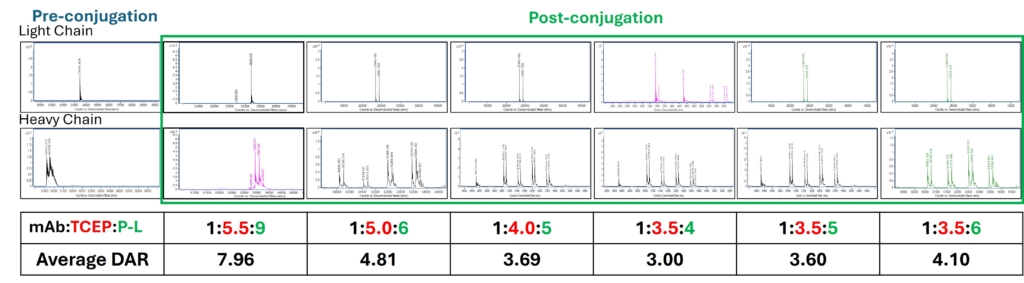
Figure 3: Reduced mAb:TCEP:payload ratios yielded ADCs with lower DAR.
Antigen-Binding Functional Assessment Across DAR Levels: SPR- and FACS-based assays were used to evaluate the HER2 antigen-binding properties of DAR-4 (4.10) and DAR-8 (7.96) ADCs and compared with the parent antibody CanMAb and the commercial ADC Enhertu (DAR-8). Cysteine-directed payload conjugation did not affect HER2 antigen binding, and both ADCs exhibited antigen-binding profiles comparable to the parent antibody and the commercial reference.
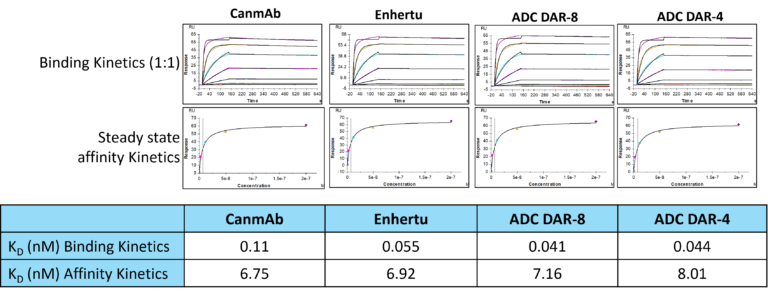
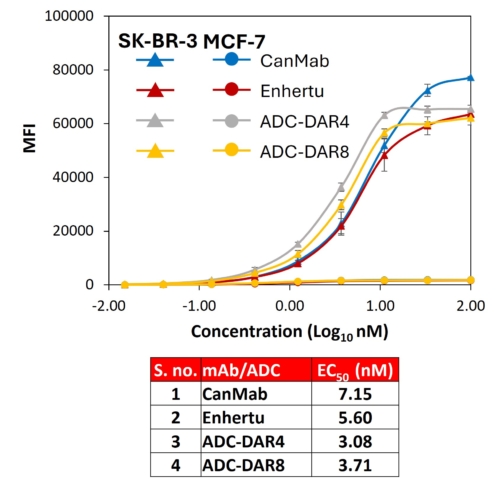
Figure 4: SPR-based HER2 antigen-binding assay (A), FACS-based cell surface HER2 antigen-binding assay (B).
This case study demonstrates Aragen’s expertise in cysteine-directed ADC bioconjugation and rational modulation of DAR through controlled reaction conditions. The ability to generate ADCs with defined DAR levels, coupled with comprehensive physicochemical and functional characterization using SPR and FACS, enables confident assessment of structure–function relationships. Together, these capabilities support accelerated and de‑risked ADC development pipelines for our clients.
Aragen is a global R&D and manufacturing partner enabling end‑to‑end development of complex therapeutics, including antibody–drug conjugates. Leveraging deep expertise in bioconjugation, analytical characterization, and functional validation, Aragen supports precise DAR control, robust QC, and structure–function assessment to accelerate ADC programs from early development through clinical and commercial readiness.
Connect with Aragen to design, optimize, and characterize ADCs with confidence—from conjugation to functional validation.
