

Patient-derived xenograft (PDX) models are widely employed in oncology drug development due to their ability to preserve the histological, molecular, and pharmacological characteristics of the original patient tumor. Colorectal cancer is one of the leading causes of cancer-related mortality worldwide, and KRAS mutations are among the most frequently observed genetic alterations associated with disease progression and therapeutic response.
In this study, the antitumor efficacy of 5-fluorouracil (5-FU) alone and in combination with bevacizumab was evaluated in a colon cancer PDX model harboring a KRAS G12V Tier 1 mutation. The study assessed tumor growth inhibition, tolerability, and histopathological changes following treatment in female NOD SCID mice bearing established colon PDX tumors.
Model Details
| Parameter | Description |
| Tumor Model | Colon PDX |
| Mutation Status | KRAS G12V (Tier 1 mutation) |
| Host Animals | Female NOD SCID mice |
| Group Size | n=6 animals/group |
Treatment Groups
| Group | Treatment |
| G1 | Vehicle |
| G2 | 5-FU (50 mg/kg, IP, twice weekly) |
| G3 | 5-FU (50 mg/kg, IP, twice weekly) + Bevacizumab (5 mg/kg, IP, twice weekly) |
Study Timeline
Tumor Growth Inhibition
Vehicle-treated animals showed rapid and progressive tumor growth, reaching a mean tumor volume of approximately 1,000 mm³ by Day 33. In contrast, treatment with 5-FU significantly slowed tumor progression, while the combination of 5-FU and bevacizumab produced the greatest antitumor effect throughout the study (Figure 1).
Statistically significant differences (Two-way Anova) were observed between:
Treatment with 5-FU significantly inhibited tumor growth, while the addition of bevacizumab further enhanced antitumor activity, resulting in earlier and greater tumor growth suppression than chemotherapy alone. These findings highlight the potential therapeutic benefit of combining anti-angiogenic therapy with standard chemotherapy in this KRAS G12V-mutant colon PDX model.
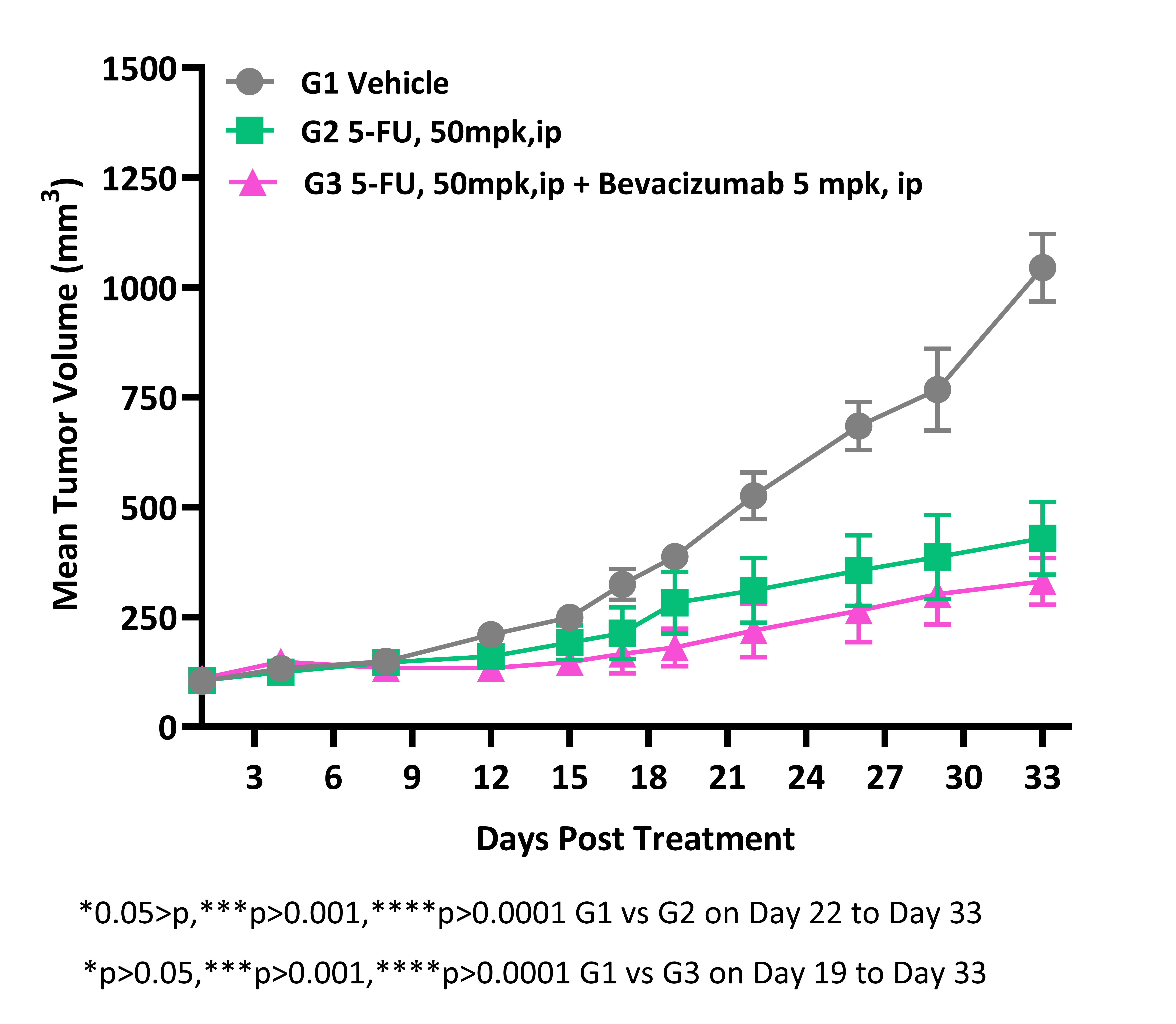
Figure 1: Tumor Growth Inhibition. Mean tumor volume progression in female NOD SCID mice bearing a KRAS G12V-mutant colon patient-derived xenograft (PDX) following treatment with vehicle, 5-FU (50 mg/kg, IP), or 5-FU (50 mg/kg, IP) in combination with bevacizumab (5 mg/kg, IP). The combination therapy demonstrated earlier and greater tumor growth suppression than 5-FU monotherapy. Data are presented as mean ± SEM. Statistical significance (Two-way Anova) was observed for Vehicle vs. 5-FU from Days 22–33 and Vehicle vs. 5-FU + Bevacizumab from Days 19–33.
Tolerability Assessment
Body weight was monitored throughout the study as an indicator of treatment-related toxicity. Overall, both 5-FU monotherapy and 5-FU plus bevacizumab combination therapy were generally well tolerated, with animals maintaining stable body weight profiles throughout the study (Figure 2).
Importantly, the enhanced antitumor activity observed with the 5-FU and bevacizumab combination was achieved without increased systemic toxicity, supporting a favorable therapeutic benefit–risk profile in this KRAS G12V-mutant colon PDX model.
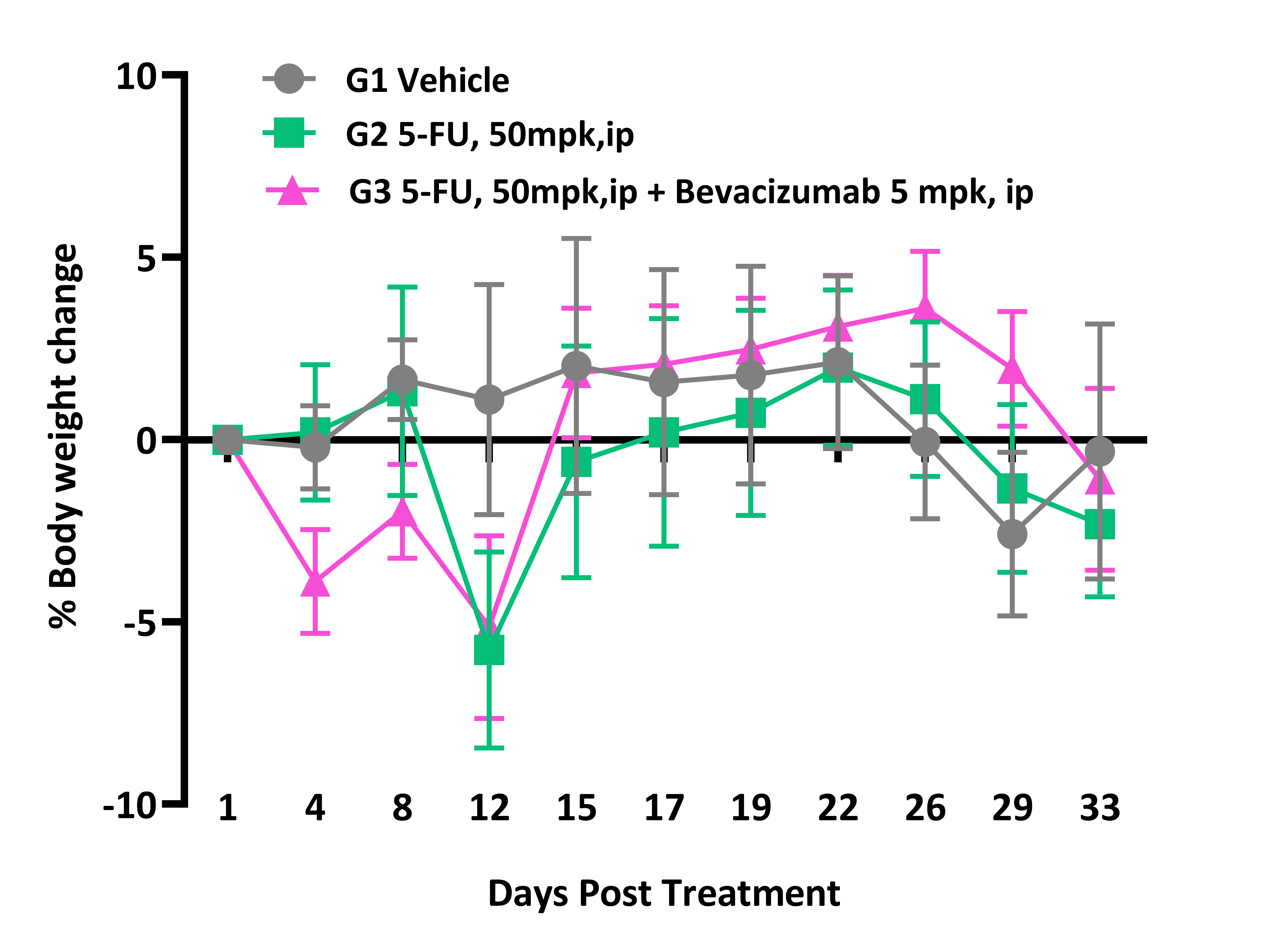
Figure 2: Tolerability Assessment. Percentage body weight change in female NOD SCID mice bearing a KRAS G12V-mutant colon PDX following treatment with vehicle, 5-FU (50 mg/kg, IP), or 5-FU (50 mg/kg, IP) in combination with bevacizumab (5 mg/kg, IP). Both treatment regimens were well tolerated, with no sustained or severe body weight loss observed during the study. Data are presented as mean ± SEM.
Histopathological Evaluation
H&E staining was performed on tumor tissues collected at study termination.
Histopathology Scores
| Parameter | Vehicle (G1) | 5-FU (G2) | 5-FU + Bevacizumab (G3) |
| Glandular Differentiation | 1 | 1 | 1 |
| Nuclear Atypia | 2 | 2 | 2 |
| Mitotic Activity | 3 | 1 | 0 |
| Tumor Necrosis (%) | 3 | 1 | 2 |
| Stromal Reaction/Desmoplasia | 2 | 2 | 1 |
| Total Score | 11 | 7 | 5 |
Histological Findings
Histopathological evaluation revealed marked treatment-associated changes in the tumor tissues.
Compared with vehicle controls:
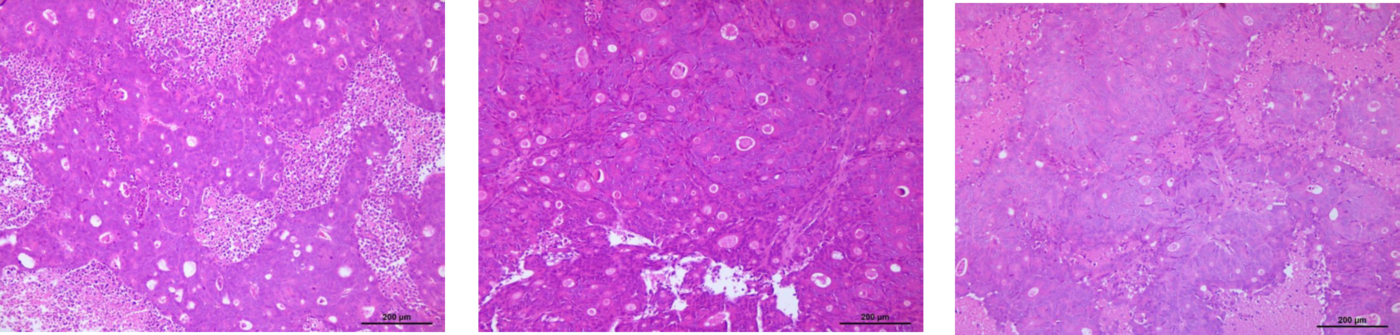
Figure 3: Representative images from H&E staining (100X) of excised tumor sections from G1: Vehicle (A), G2: 5-FU 50mpk, ip (B) and G3: 5-FU 50mpk, i.p. + Bevacizumab 5 mpk, i.p.
Representative H&E staining results (Figure 3) demonstrated reduced tumor cellularity and treatment-related morphological alterations in the combination group relative to controls.
These findings corroborate the observed antitumor efficacy and suggest enhanced suppression of tumor progression following combination therapy.
In a KRAS G12V-mutant colon cancer PDX model, 5-FU significantly inhibited tumor growth, while the addition of bevacizumab delivered earlier and greater tumor growth suppression. The combination therapy was well tolerated and did not result in additional systemic toxicity. Histopathological findings further supported the efficacy data, demonstrating reduced mitotic activity and the lowest overall pathology score in the combination group.
Collectively, these results highlight the therapeutic benefit of combining 5-FU with bevacizumab and demonstrate the value of this PDX model for evaluating colorectal cancer treatment strategies. To further elucidate treatment response, Aragen can support translational characterization of this model through immunohistochemistry (IHC) and downstream biomarker analyses, including Ki67, p53, CDX2, CK20, and EpCAM, providing deeper mechanistic insights and supporting biomarker target-driven efficacy assessment.
Aragen provides an integrated in vivo oncology platform that supports oncology drug discovery from efficacy evaluation to translational insights.
From tumor model selection to biomarker-driven insights, Aragen delivers comprehensive oncology solutions to support confident go/no-go decisions.
Ready to advance your oncology program with translationally relevant preclinical models?
Get in touch with Aragen to discuss tailored study strategies and integrated oncology solutions.
