

Streamlined approach to preclinical testing, leveraging the latest technologies and methodologies to deliver fast and reliable results.
Developing and commercializing vaccines follows a rigorous regulatory process, of which preclinical safety assessment is a critical component. Regulatory agencies mandate that all safety and efficacy data generated by organizations during the pre-clinical and clinical phases (as part of the registration dossier for the vaccine) should comply with the Good Laboratory Practice (GLP) standards which ensure the quality and reliability of the data generated. In addition, specific additional nonclinical safety studies are required for adjuvants and immunostimulants.
Here we report a study conducted for an overseas client who had completed phase-1 clinical trials. However, prior to patient recruitment for Phase 2 trial, the client partnered with us to provide additional preclinical safety data, as stipulated by regulatory agencies. We performed extensive preclinical safety assessment of its candidate drug that resulted in successful report submission to the regulatory agencies within six months from inception of the project. More importantly, the timeline for patient recruitment for Phase 2 was met.
The client is a Thailand based university conducting clinical trails of a vaccine candidate (mRNA vaccine for COVID (respiratory viral disease)) produced by a Thai- French, company. The company is involved in development of transformative therapies for life threatening viral and bacterial respiratory infections
The client had successfully completed Phase 1 clinical trials, but regulatory agencies asked for additional extensive preclinical safety studies before proceeding to Phase 2 patient recruitment. This included a comprehensive set of experimental data, including intricate immunogenicity assessment, detailed biodistribution profiling, acute phase protein response analysis, exhaustive clinical biochemistry evaluation, and meticulous histopathological analysis. These studies needed to be conducted within six months and failure to comply with them would have hindered the recruitment of patients for Phase 2.
1. To obtain approval to import the test vaccine from the client’s country and make all necessary arrangements for preclinical studies. This included procuring enough animals, reagents, and consumables for in vivo experiments.
2. To develop and validate bioanalytical protocols and conduct a range of experimental studies, such as clinical biochemistry, acute phase protein response, immunogenicity assessment, necroscopy, and histopathology, and biodistribution studies.
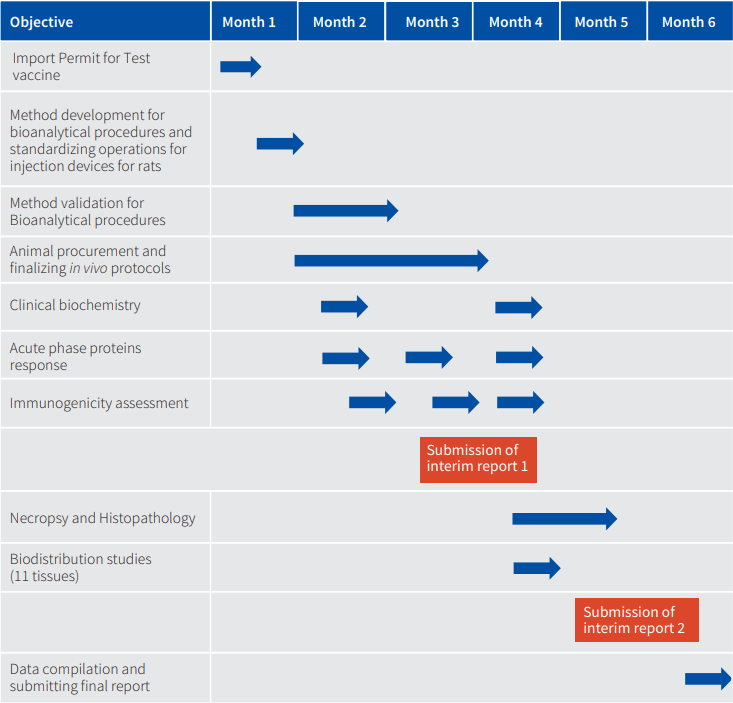
Aragen conducted a comprehensive evaluation of the vaccine candidate through two distinct administration routes – intramuscular and intradermal. By conducting testing through both routes, we provided a more comprehensive understanding of the vaccine’s safety and efficacy, ultimately increasing the likelihood of successful regulatory approval.
The method for assessing immunogenicity and biodistribution was developed in an impressive two-week timeframe from project inception. Within just one week after the study group’s final dosing and necropsy, interim reports were submitted, and regulatory agencies provided provisional approval. Furthermore, the final report was submitted within three weeks of the recovery group’s necropsy, and it was accepted by the regulatory agencies without any observations. This helped in commencing the phase-2 of the clinical trials without any delay. The entire project (preclinical testing to final report submission) was completed within just six months and the client was so impressed that they offered Aragen an additional reproductive toxicity study.
