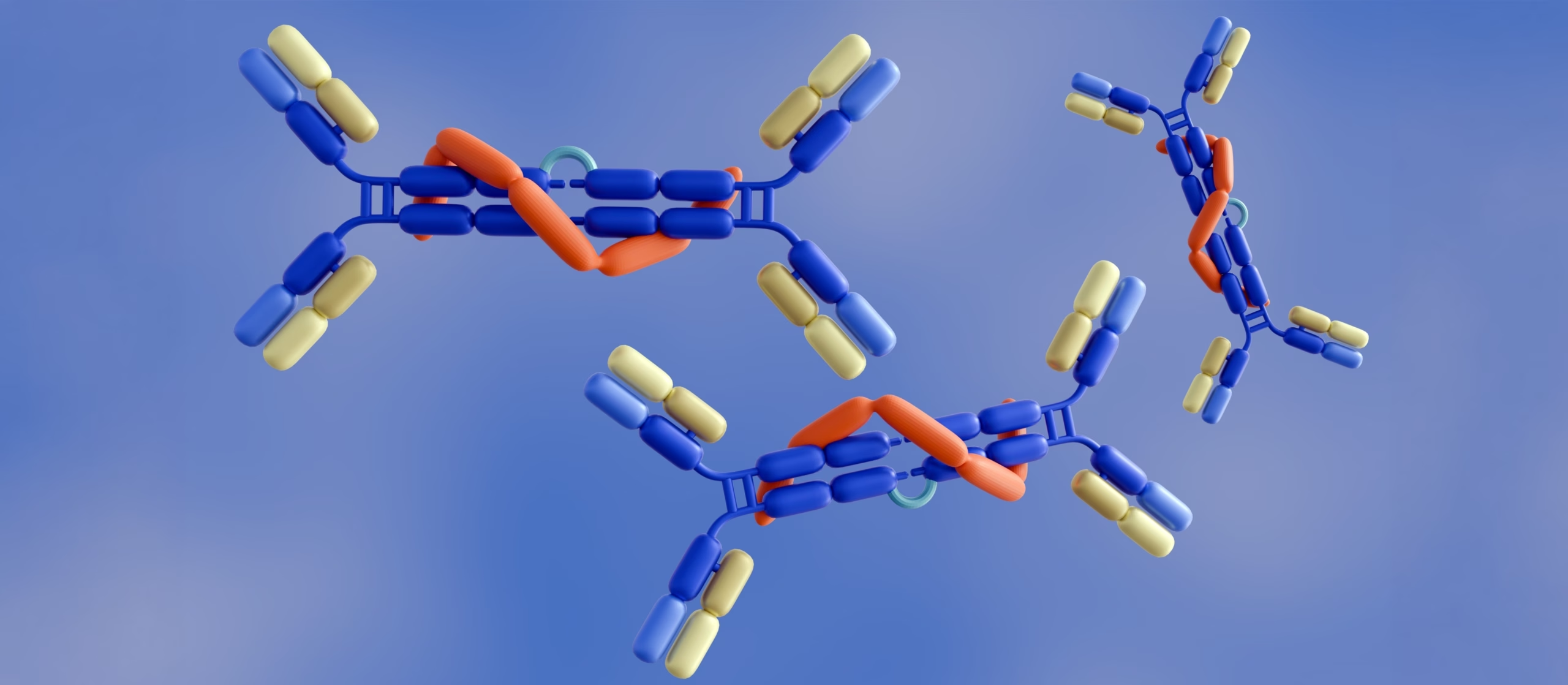

Immune-Stimulating Antibody Conjugates (ISACs) combine the target specificity of monoclonal antibodies with immune-activating payloads to selectively stimulate anti-tumor immune responses within the tumor microenvironment. Unlike conventional antibody-drug conjugates (ADCs), which typically deliver cytotoxic payloads, ISACs are designed to locally activate innate immune pathways through targeted delivery of immunomodulatory agents such as Toll-like receptor (TLR) agonists.
A key challenge in ISAC development is achieving controlled payload attachment. Conventional lysine- or cysteine-based conjugation approaches often generate heterogeneous drug-to-antibody ratio (DAR) distributions and multiple conjugation species, creating challenges in process development, product characterization, stability, and regulatory assessment.
To address these challenges, Aragen established an integrated Thiomab engineering (Junutula JR, et al Nat Biotechnol. 2008; Junutula JR, et al Clin Cancer Res. 2010) based site-specific bioconjugation platform using engineered cysteine residues for precise payload attachment. Using trastuzumab-derived Thiomab variants and a TLR7 agonist linker-payload, the platform was evaluated for its ability to generate controlled DAR-2 ISACs while maintaining antibody stability and structural integrity.
Aragen leveraged its integrated antibody engineering and bioconjugation capabilities to establish a Thiomab-based site-specific conjugation workflow for generating controlled DAR immune-stimulating antibody conjugates (ISACs).
To create highly controlled and reproducible conjugation sites, selected amino acids within the heavy- and light-chain CH1-CH3 regions of trastuzumab were strategically mutated to cysteine residues. These engineered cysteines provide defined thiol handles for site-specific payload attachment, enabling greater control over conjugation-site occupancy, DAR distribution, and product consistency compared with conventional conjugation approaches.
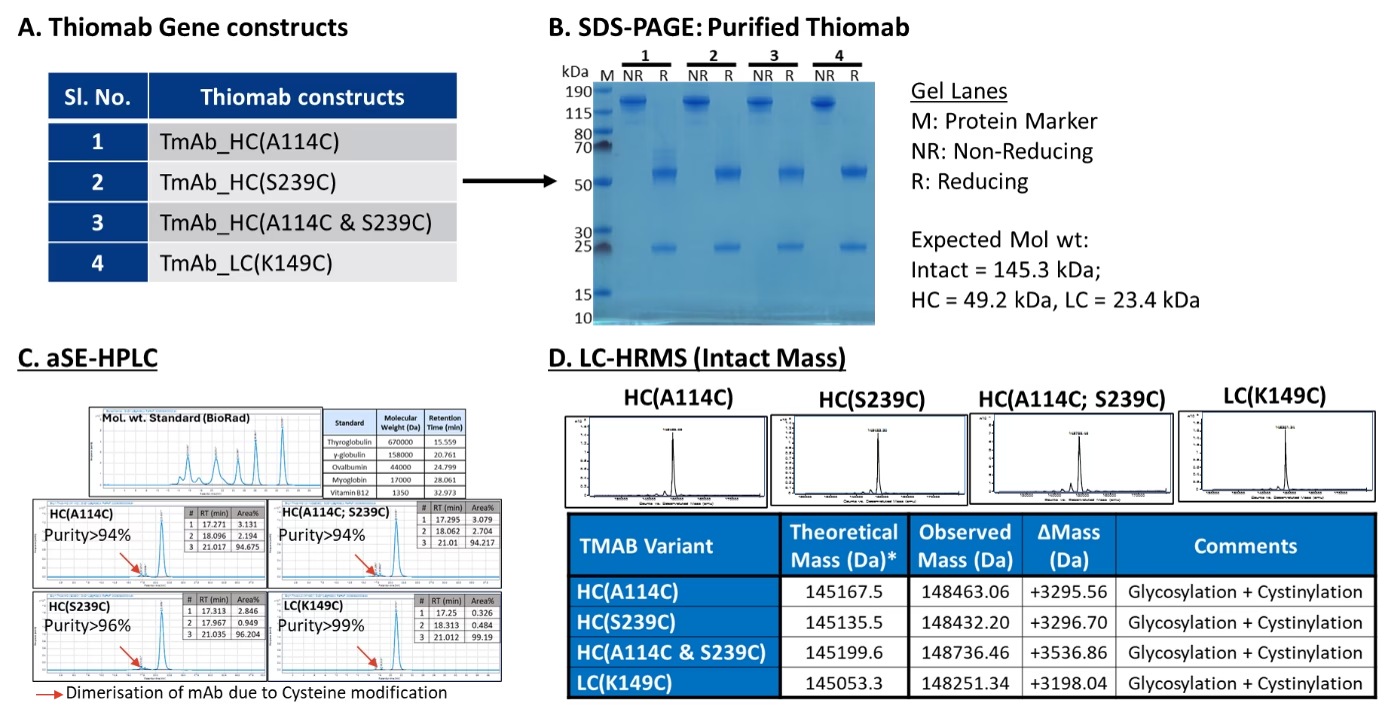
Figure 1: Generation and characterization of engineered Thiomab variants.
(A) Trastuzumab-derived cysteine-engineered constructs. (B) SDS-PAGE analysis confirming successful expression and purification. (C) aSEC-HPLC chromatograms demonstrating high monomeric purity (>94%). (D) LC-HRMS intact-mass analysis confirming expected molecular masses and identifying glycosylated and cysteinylated species.
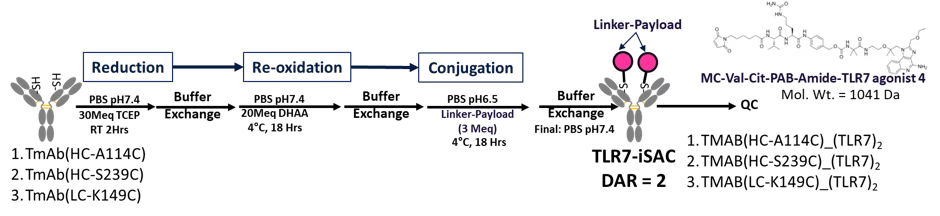
Figure 2: Site-specific conjugation strategy for Thiomab-derived ISACs.
Engineered cysteine residues were activated through controlled reduction and re-oxidation followed by conjugation with a maleimide-functionalized MC-Val-Cit-PAB-Amide-TLR7 agonist linker-payload to generate site-specific immune-stimulating antibody conjugates.
Generation of Controlled DAR-2 ISACs
LC-HRMS analysis confirmed successful site-specific payload incorporation across all three Thiomab variants, resulting in predominantly DAR-2 conjugates (Figure 3). These results demonstrate the ability of the Thiomab platform to achieve precise and reproducible payload loading while minimizing conjugate heterogeneity, a critical requirement for ISAC development.
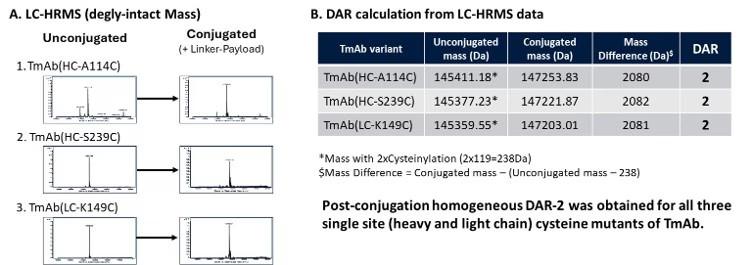
Figure 3: LC-HRMS confirmation of site-specific conjugation and DAR determination.
Deglycosylated intact-mass analysis demonstrated successful payload attachment and generation of predominantly DAR-2 conjugates across all evaluated Thiomab variant.
Thermal stability Assessment
Differential Scanning Fluorimetry (DSF) was used to assess the impact of cysteine engineering and payload conjugation on antibody stability. Engineered cysteine incorporation was generally well tolerated, with only minor changes observed in thermal unfolding profiles relative to the parental antibody (Figure 4A).
Following conjugation, stability effects were found to be site dependent, highlighting the importance of conjugation-site selection in maintaining structural integrity and supporting downstream developability (Figure 4B).
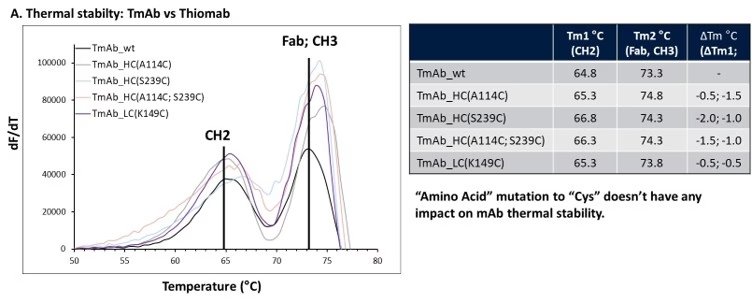
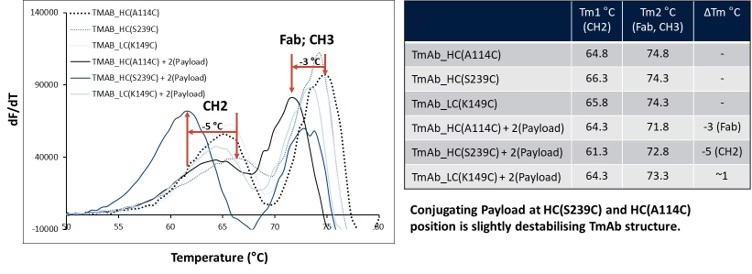
Figure 4: DSF-based thermal stability analysis of Thiomab variants and corresponding ISACs.
(A) Thermal unfolding profiles of parental trastuzumab and engineered Thiomab variants demonstrating minimal impact of cysteine incorporation on overall stability. (B) Comparison of unconjugated and conjugated Thiomab variants showing site-dependent effects of payload attachment on thermal stability.
This case study highlights Aragen’s integrated capabilities in Thiomab engineering, site-specific bioconjugation, and analytical characterization for the development of immune-stimulating antibody conjugates (ISACs).
By combining antibody engineering, conjugation process development, and comprehensive characterization within a single workflow, Aragen enables the generation of well-defined antibody conjugates with greater control over product quality and developability. This platform provides a robust foundation for advancing next-generation ISACs and other site-specific bioconjugates from discovery through development.
Aragen offers integrated capabilities across antibody engineering, bioconjugation, analytical characterization, and developability assessment, enabling seamless execution of complex antibody conjugate programs from discovery through development. Our expertise in Thiomab engineering, site-specific conjugation, and advanced analytical techniques helps clients generate well-characterized conjugates with precise payload control, robust product understanding, and reduced development risk.
By combining deep biologics expertise with flexible conjugation platforms and comprehensive analytical support, Aragen enables the efficient development of next-generation ADCs, ISACs, and other targeted bioconjugates.
Partner with Aragen to leverage site-specific conjugation, robust analytical characterization, and integrated development expertise.
